
Alphabet Music and Movement Activities for Preschool: Fun Ways to Learn Letters and Sounds
Updated: Aug 7
A wonderful thing about bringing music into learning is that we can provide children with a multisensory, whole-body experience. When it comes to exploring letters and their sounds, music engages multiple pathways for learning—children can hear the sounds in rhythm, see the letters through visuals and movement cues, and feel the beat as they act them out.
Melody brings sounds to life, while rhythm and repetition offer natural opportunities to practice letters and their sounds in a fun, engaging way. Paired with alphabet visuals and movement, we’re making learning interactive—honoring children’s need to move, express, and play as they learn.
Here are a few simple, music-filled alphabet activities to get kids singing, moving, and learning together!
Alphabet Movement Cards + Action Chant
🎶 A fun and active way to help children connect letters, sounds, and movement!
I love using movement cards in my sessions! I created some Alphabet Movement Cards to bring imagination, movement, and creative expression into learning letters and sounds. Each card features a playful movement that goes along with a letter sound, turning letter learning into a full-body experience.
Play a simple drum loop or keep the rhythm going by clapping or tapping together. Keeping a steady beat isn’t just fun—it’s also incredibly beneficial. Research shows that the ability to keep a steady beat is linked to early reading and language skills. When children move, clap, or chant to a rhythm, they’re practicing timing and sequencing—skills that later support phonemic awareness and reading fluency.
Here’s a simple alphabet chant for this activity:
“What’s the letter? What’s the sound?
Let’s get moving, dance around!
Look right here, what do you see?
It’s the letter (____) — move with me!”
After singing the chant, hold up an alphabet card and invite children to join in the movement (for example: “A — act like an alligator!”).

This works beautifully in circle time or small groups, and it’s easy to adapt for different energy levels—stand and move for an active version or keep it seated with simple motions.
To extend the activity, bring out an Alphabet Chart and have children color in the letters they explored during the movement activity.
Alphabet Freeze Dance
A freeze dance is always a trusted favorite when you want to bring fun and learning together!
Here’s a musical twist that helps children connect letters with sounds and words:
Play music and invite children to dance.
When the music stops, everyone freezes!
Hold up a letter card.
Children name something that starts with that letter.
Finally, everyone acts it out together! (Example: “B—Ball. Let’s bounce like a ball!”)
For another movement-based phonics activity that leads children through the alphabet in an active way, check out Phonercise by Jean Warren—it’s great!
Alphabet Magic Potion
A playful seated action song for exploring letters and beginning sounds!
This one is always a hit during my sessions with preschoolers! Seated action songs are a favorite of mine because they keep a sense of structure while still giving children an opportunity to move their bodies—a happy medium between sitting still and those bigger, full-body movement experiences.
Here's the simple chant:
Mix the potion all around,
Add a letter, make its sound,
Stirring, stirring, almost done,
Out comes a (something that starts with that letter)—oh what fun!
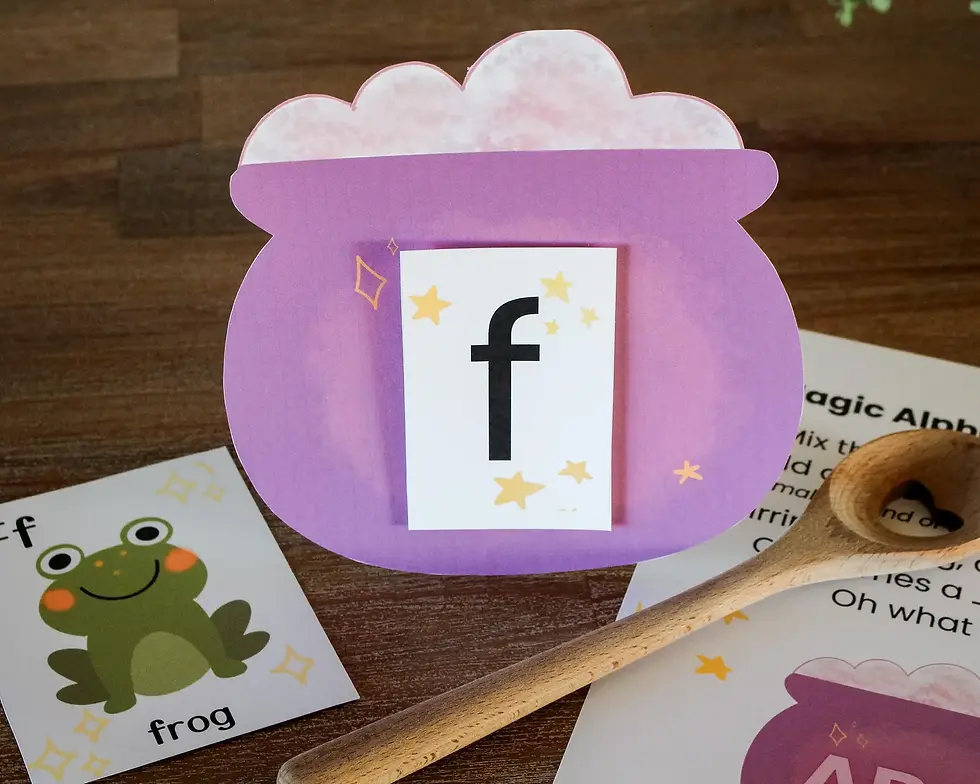
Invite children to stir and mix their imaginary potions as you lead the chant. Choose a letter to explore and have the small object or picture that begins with that sound ready inside your "magic pot.”
For example, if you're exploring F, you could place a frog toy inside the pot. When the chant ends, pull it out and reveal the surprise:
"It's a frog! F is for frog!"
Then hold up the F is for Frog flashcard to reinforce the connection between the letter and the object. You could also place the flashcard itself inside the magic pot and use it as the surprise reveal instead.
Children can then make the beginning sound together, brainstorm other words that begin with F, or act out the word.
The excitement of guessing what's inside adds a little wonder to the activity.
Bonus Ideas for Musical Alphabet Play
Here are a few more interactive ways to bring music into alphabet learning and early literacy:
Tap the Beat of Words: Use simple percussion instruments (like rhythm sticks or small hand drums) to tap out the syllables in words. This helps children connect rhythm with sound patterns — a foundational skill for early reading.
Playing Musical Instruments: Explore instruments that begin with your letter of the week (for example, D is for drum or B is for bells). It’s a fun way to introduce new sounds and vocabulary while bringing music into learning.
When we blend music, movement, and play, the alphabet comes to life for young learners. These playful activities make learning letters and sounds joyful, active, and creative!


Comments